All He Wanted Was Something to Eat
The outdoor restaurant patio was filled with the familiar sounds of conversation, passing traffic, and silverware touching plates. Customers enjoyed their meals beneath the daylight, while pedestrians continued along the surrounding shopping street.
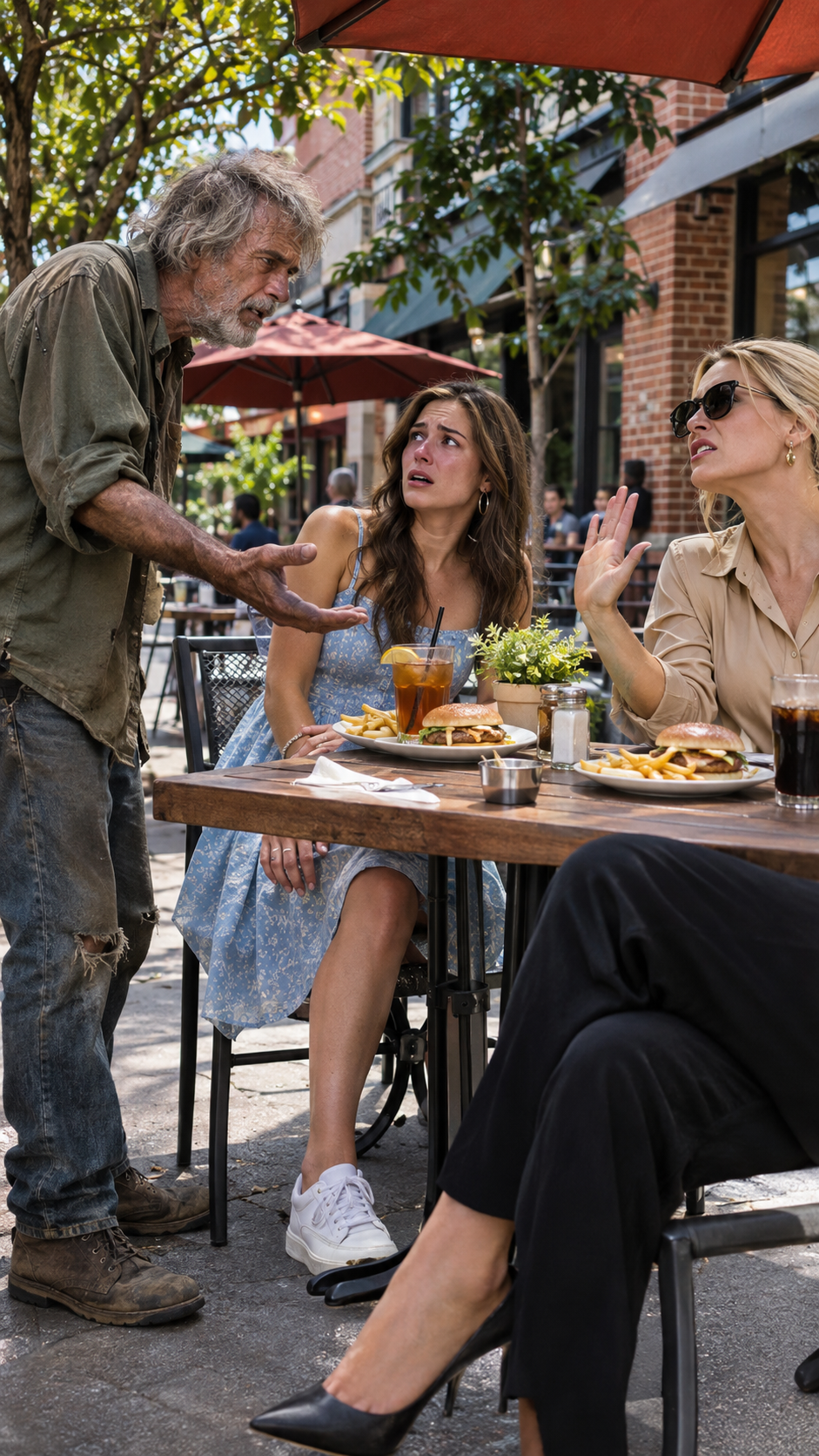
At one of the tables sat two well-dressed women enjoying burgers and fries. Their handbags rested nearby as they spent time together, seemingly unaware of the elderly man approaching their table.
The man was homeless, exhausted, and visibly hungry. His trembling hand extended toward the table as he gathered the courage to speak. He did not interrupt with an angry demand or attempt to take anything from their plates. Instead, he quietly asked a simple question.
“Excuse me, could you spare something to eat?”
The brunette looked toward him with surprise. Her blonde companion, however, responded impatiently.
“Please, leave us alone.”
The elderly man remained beside the table for a moment. His expression revealed disappointment as he realized that his request would not be answered with an offer of food.
The two women had meals in front of them, while he was struggling to find something to eat. The contrast between their circumstances made the encounter particularly uncomfortable.
Nevertheless, the man did not argue. He did not raise his voice or criticize either woman for refusing his request. He simply remained nearby as the ordinary sounds of the restaurant continued around him.
Neither woman could have imagined that this brief encounter would soon give them an entirely different impression of the elderly stranger.
Something Valuable Was Left Behind
The two women eventually stood from their seats, collected their handbags, and began walking away from the restaurant patio.
Chairs moved against the pavement as they departed, leaving behind an empty drinking glass and the remains of their visit.
The elderly man watched them leave. His request for something to eat had been unsuccessful, and nothing about his circumstances appeared to have changed.
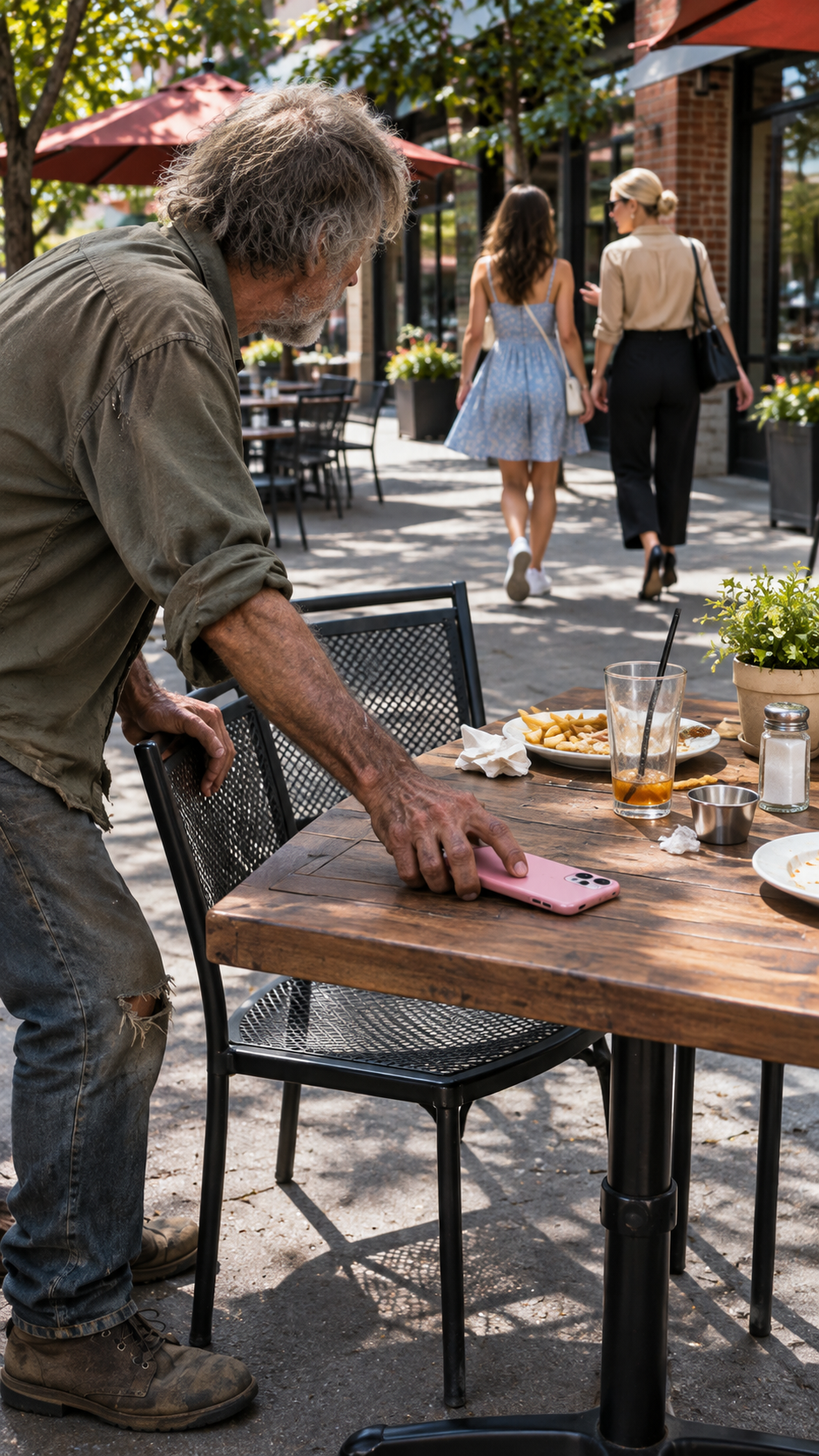
Then something on the table caught his attention.
Beside the empty drinking glass was a pink smartphone.
One of the women had accidentally forgotten it when collecting her belongings. The device remained clearly visible on the table, even as its owner continued walking farther along the sidewalk.
The elderly man carefully picked it up.
For someone facing difficult circumstances, finding an expensive personal belonging might create a complicated situation. The smartphone could have been valuable, but the man immediately chose to return it to its rightful owner.
He looked toward the departing women.
“Miss! You forgot something!”
His voice competed with the sounds of traffic and nearby conversations. The women continued moving along the street, and the distance between them increased.
Holding the pink smartphone carefully, the elderly man began walking after them.
The same people who had declined his request for food were now the people he was trying to help.
He could have ignored the forgotten phone and continued with his day. Instead, he made the effort to follow its owner, ensuring that she would have an opportunity to recover her belongings.
His decision was about to change the entire direction of the afternoon.
An Act of Honesty Outside the Bakery
The elderly man continued along the sidewalk until he caught up with the two women outside a redbrick bakery.
When the brunette noticed him approaching, she turned around nervously. Given their earlier interaction at the restaurant, she appeared uncertain about why he had followed them.
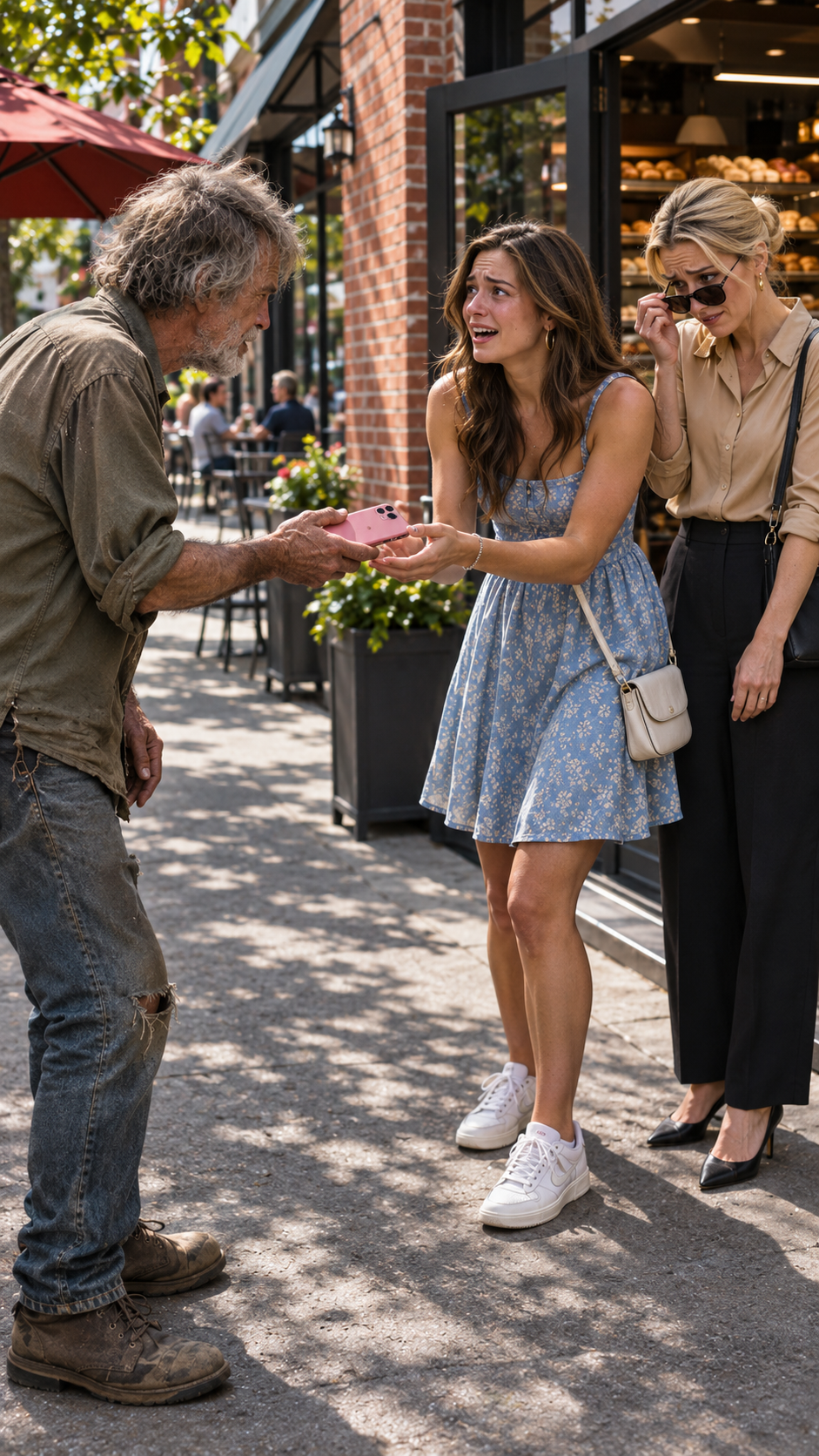
The man extended his hand.
Resting in his palm was her pink smartphone.
“You left this on the table,” he said gently.
The brunette stared at the device in surprise. She immediately recognized her belongings and reached forward to accept the phone.
“Oh my gosh! Thank you so much!”
Her expression changed as she realized what had happened. The elderly man had followed her along the street for no other apparent reason than to return something she had accidentally forgotten.
Beside her, the blonde woman lowered her sunglasses. Her earlier impatience was replaced by visible embarrassment.
Only moments before, the elderly stranger had asked them for something to eat. His request had been dismissed, yet he had still chosen to help when one of them needed assistance.
He did not ask for money in exchange for returning the smartphone. He did not demand an apology or remind them of how they had responded to his request.
He simply handed the phone back.
For the brunette, the encounter offered a reason to reconsider the impression she had formed of the man outside the restaurant. His circumstances had not prevented him from making an honest and considerate decision.
The forgotten smartphone had become something more than a misplaced personal belonging. It had created an opportunity for the women to see the elderly stranger differently.
The brunette’s surprised expression suggested that the encounter had affected her deeply.
And although the phone had been safely returned, she was not ready to let the afternoon end there.
She Decided to Do Something Different
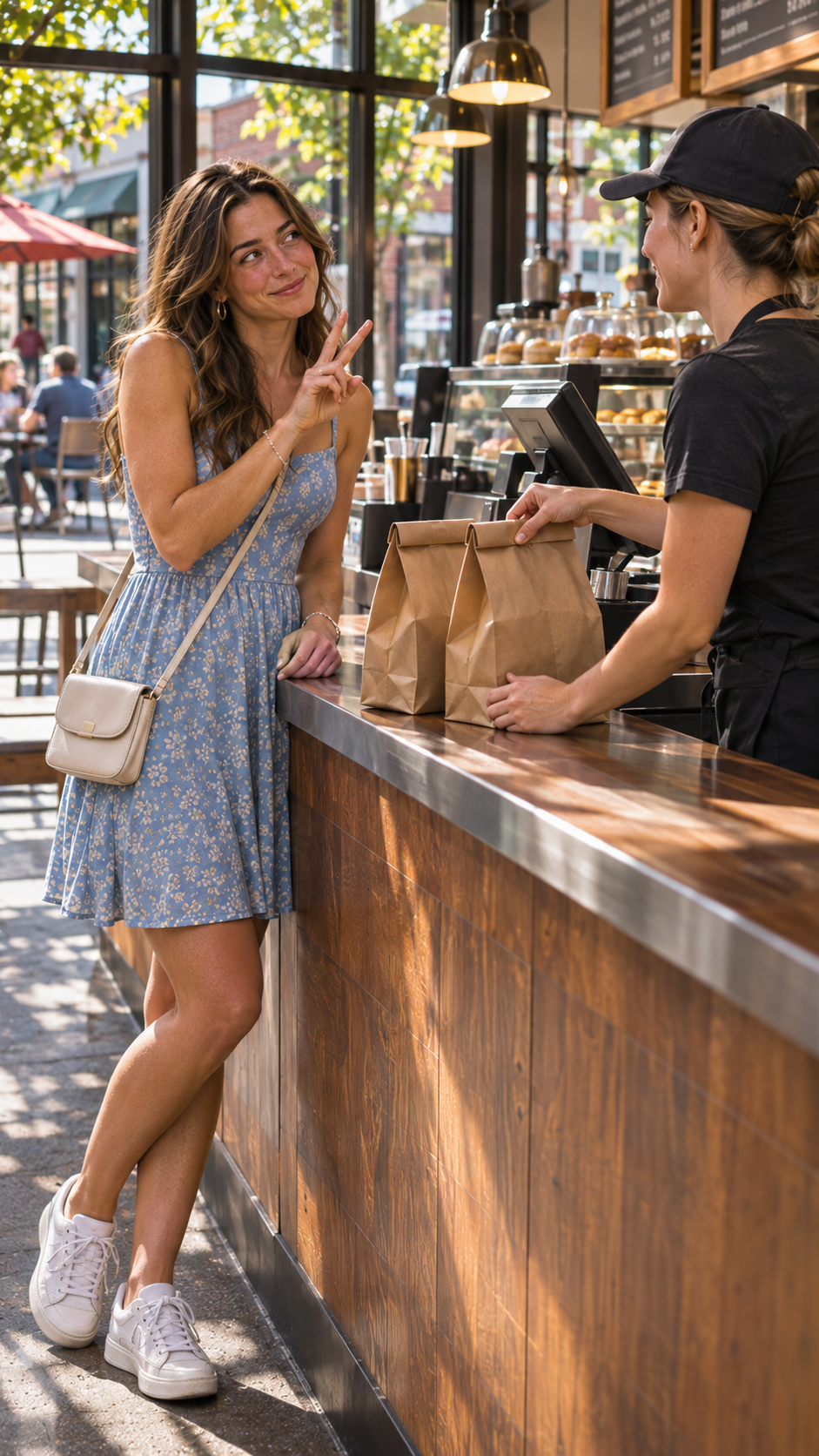
Inside a modern diner, warm sunlight entered through large windows and illuminated the wooden counters.
The brunette stood near the counter, preparing to purchase freshly made takeaway food. An employee worked behind the counter while the familiar sounds of a busy kitchen filled the restaurant.
The woman appeared thoughtful as the meal was prepared.
Her earlier encounter with the elderly man had given her an opportunity to respond differently. He had returned her smartphone despite receiving nothing when he asked for food.
Now she was in a position to offer him something useful.
“Could you make that two meals, please?”
“Absolutely,” the employee replied.
The order included two burgers, fries, and drinks. The employee carefully placed the food inside a large brown paper takeaway bag.
The brunette reached for the bag and prepared to leave.
There was no elaborate presentation or public announcement accompanying her decision. She simply purchased food and headed toward the restaurant exit.
The warm atmosphere of the diner contrasted with the uncomfortable interaction that had taken place earlier on the outdoor patio.
Previously, the elderly man had stood beside a table asking whether someone could spare something to eat. Now, two freshly prepared meals were being carried outside specifically for him.
The woman had chosen to respond to his honesty with generosity.
She did not yet know why purchasing two meals would become such an important detail in the story.
That discovery was still waiting for her farther along the street.
The Gift That Meant More Than She Realized
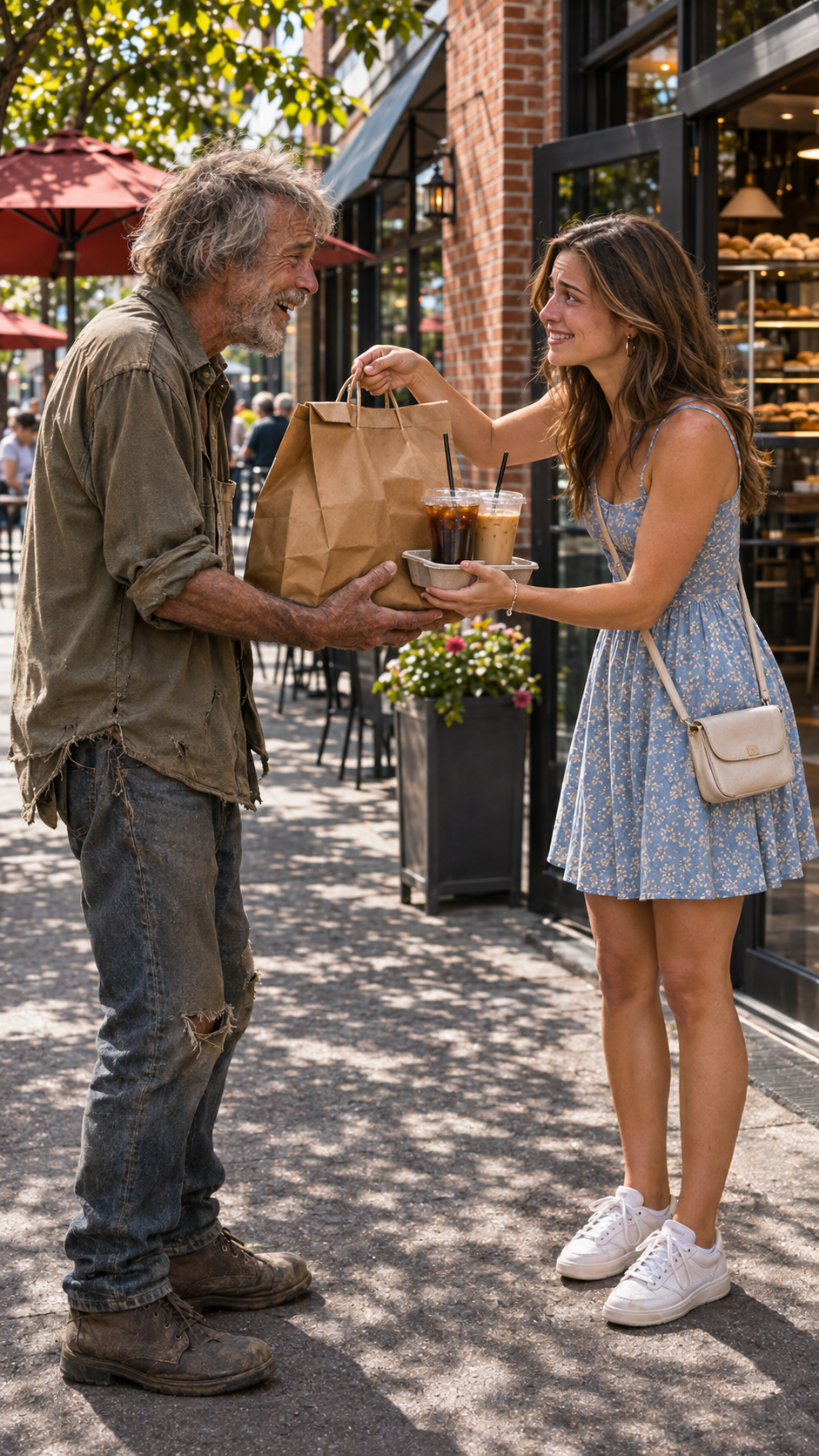
Outside the diner, the brunette approached the elderly man carrying the large brown takeaway bag and drinks.
He looked toward her with genuine surprise.
The woman extended the food toward him.
“These are for you. Thank you for being so honest.”
The elderly man accepted the bag, his expression becoming emotional as he realized what she had brought him.
“Thank you. This means more than you know.”
His words were simple, but they carried particular significance.
Earlier, he had approached the two women because he was hungry and exhausted. Now he was holding freshly prepared food, including enough for more than one person.
The brunette smiled as she watched his reaction.
However, instead of opening the bag and immediately beginning to eat, the elderly man turned toward a nearby covered walkway.
He started walking away with the food and drinks.
The woman watched curiously.
Considering how hungry he had appeared outside the restaurant, she might reasonably have expected him to find a nearby place to sit and enjoy his meal.
But he seemed to have somewhere else to go.
The brunette began following him, maintaining enough distance to observe where he was heading.
The elderly man continued toward a covered section of the sidewalk beside a brick storefront.
The brown paper bag remained carefully held in his hands.
His earlier statement began to take on a deeper meaning. The food was clearly important to him, but his decision not to eat immediately suggested that there was another reason for his gratitude.
The brunette was about to discover that her gesture had reached beyond the person she originally intended to help.
The Person Waiting Beneath the Covered Walkway
Under the shelter of a covered walkway beside a brick storefront, an elderly homeless woman sat quietly on a blanket.
The surrounding street continued with its ordinary activity, but the sheltered area provided a quieter setting away from the busy restaurant patio.
The elderly man approached her and lowered himself into a kneeling position.
He opened the brown takeaway bag and began removing the food.
Instead of taking the first burger for himself, he gently handed one to the elderly woman along with a drink.
“Here, sweetheart. We can finally eat.”
The woman accepted the food.
“Thank you,” she whispered.
The elderly man then took his own meal from the bag.
The brunette stood nearby, watching the unexpected scene unfold.
The man who had approached her table because he was hungry had not been thinking only about himself. Once he received the food, he immediately brought it to another person who also needed something to eat.
The two elderly people began sharing their meals beneath the covered walkway.
For the brunette, the scene provided a completely different understanding of the encounter that had begun outside the restaurant.
Her decision to purchase two meals had allowed both people to receive food. What she had initially intended as a gesture of appreciation toward the honest stranger had become an act of assistance for someone she had not even known was there.
Tears appeared in her eyes as she watched them.
The elderly man’s generosity had continued even after his own immediate need had been addressed.
Honesty When Nobody Is Watching
One of the most meaningful aspects of the story is the elderly man’s decision to return the forgotten smartphone.
He had just experienced rejection when he noticed the valuable device beside the empty drinking glass.
Nobody had offered him food, and the women were already walking away. Nevertheless, he chose to protect the belongings of someone who had not helped him.
His actions demonstrate an important distinction between a person’s circumstances and their character.
Financial hardship does not determine whether someone is honest, considerate, or compassionate. The elderly man was experiencing homelessness and hunger, but those difficulties did not prevent him from treating another person’s property with respect.
He returned the phone without requesting a reward.
The brunette’s subsequent decision to purchase food was her own response to his kindness, rather than a condition he had placed on returning the device.
That detail gives the encounter its emotional strength.
The story presents honesty as something worth practicing regardless of whether another person has previously shown kindness in return.
Looking Beyond Someone’s Circumstances
The initial interaction outside the restaurant demonstrates how quickly people can dismiss someone without understanding their situation.
The elderly man approached with a straightforward request for food. The blonde responded impatiently, while the brunette appeared surprised by his presence.
Neither woman knew the full circumstances behind his request.
They did not know that another elderly person was waiting beneath a covered walkway or that the man would later share the food he received.
The discovery at the end of the story reveals how much can remain hidden behind an ordinary encounter.
Someone asking for assistance may be dealing with challenges that are not immediately visible. Their appearance or financial circumstances cannot provide a complete understanding of their experiences, relationships, or values.
The brunette’s change of behavior is therefore an important part of the narrative.
Rather than continuing with her afternoon after recovering the smartphone, she chose to reconsider her earlier interaction and offer practical assistance.
Her decision did not solve every difficulty facing the two elderly people, but it provided them with something they immediately needed.
Two Meals, One Meaningful Gesture
The decision to purchase two meals initially appears to be a simple detail.
However, the final encounter beneath the covered walkway reveals its importance.
Had the woman purchased only one meal, the elderly man might still have chosen to share it. Instead, the two burgers, fries, and drinks allowed both people to receive food.
The story does not establish the precise relationship between the elderly man and woman. What it clearly depicts is his affection and concern for her well-being.
His first action after opening the takeaway bag is to offer her something to eat.
That moment reveals a form of generosity that does not depend on financial abundance.
Even while experiencing hardship himself, the elderly man remains willing to share what he receives.
The brunette’s emotional reaction reflects the unexpected impact of witnessing that decision.
She had originally purchased the food to thank someone for returning her smartphone. By following him, she discovered that her gesture had helped another vulnerable person as well.
Kindness Can Begin With a Second Chance
The fictional story does not portray the brunette as someone who behaved perfectly from the beginning.
Instead, it shows a person reconsidering her response after an unexpected encounter.
That change is important because meaningful kindness can sometimes begin with recognizing an earlier mistake or missed opportunity.
The woman cannot change the fact that the elderly man’s original request went unanswered. However, she can choose how to respond after discovering his honesty.
Purchasing food becomes her opportunity to make a different decision.
The final scene does not establish whether the blonde woman later changes her behavior or whether the brunette provides additional assistance beyond the meals.
Those details remain outside the story.
What the audience witnesses is a specific moment of generosity and its immediate effect on two elderly people.
The encounter offers a reminder that treating others with dignity should not depend on whether they first demonstrate their worth through an extraordinary act.
Everyone deserves basic respect, including people experiencing homelessness, hunger, or financial hardship.
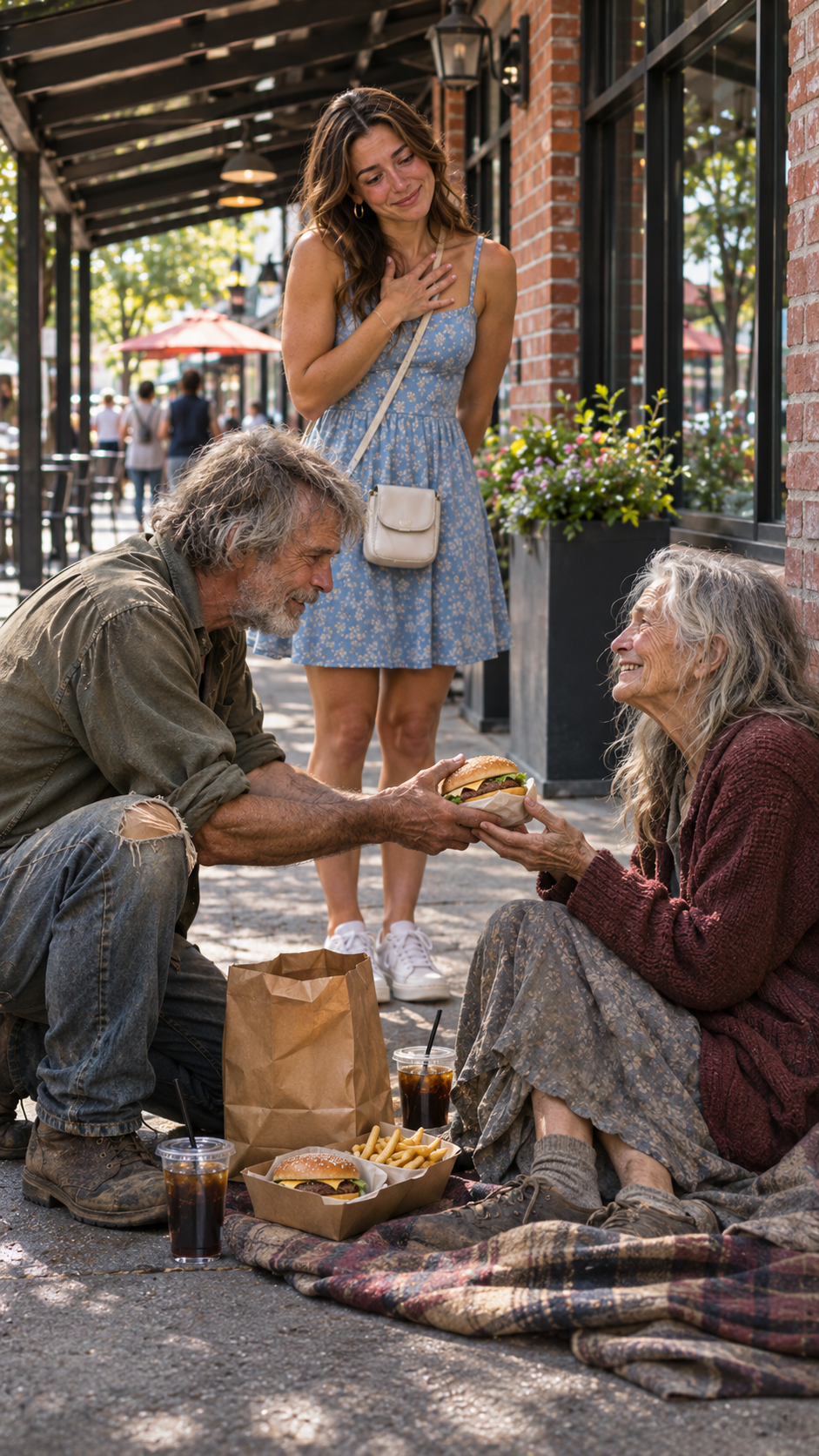
Beneath the covered walkway, the two elderly people quietly enjoyed their burgers and drinks while the brunette watched with tears in her eyes. The man who had been turned away when asking for food had returned a valuable smartphone without expecting anything in exchange, and when kindness finally reached him, he chose to share it. Their fictional encounter ended with a beautiful reminder that true generosity is not measured by how much someone possesses, but by their willingness to care for others.