Something Was Struggling Beneath the Wooden Pier
It was a beautiful morning along a sandy coastal beach. Gentle waves rolled toward the shoreline, seabirds flew above the water, and bright sunlight reflected across the ocean.
An old wooden fishing pier extended over the shallow seawater, surrounded by large granite rocks that had been shaped by years of exposure to the waves.
Everything appeared peaceful.
However, beneath the weathered wooden structure, something was desperately struggling.
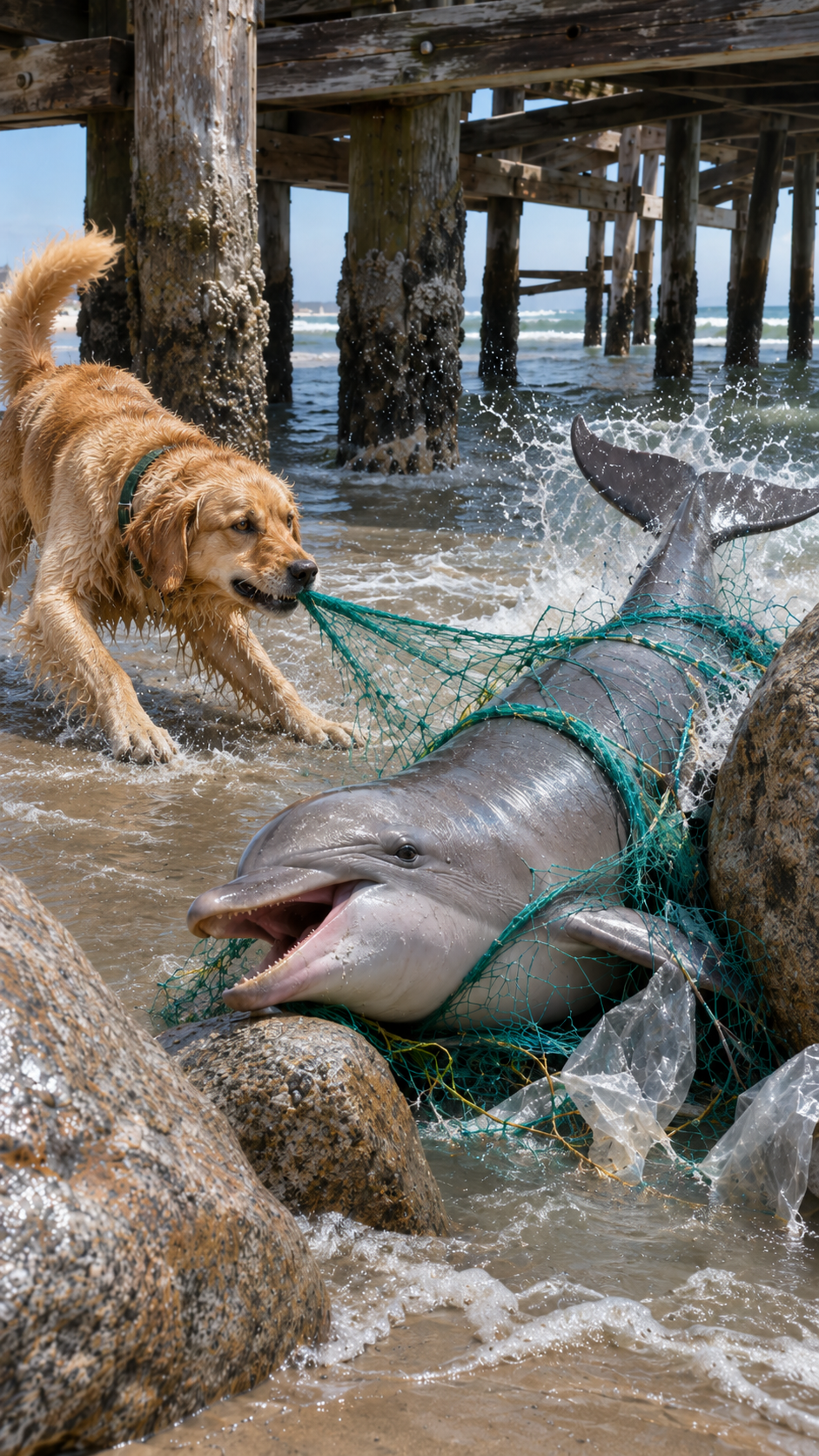
A gray bottlenose dolphin had become trapped between the rocks. Green fishing net surrounded its body, while pieces of transparent plastic debris remained tangled around it.
The dolphin suddenly moved its tail, sending water splashing into the air.
Despite its efforts, it could not escape.
The fishing net remained caught between the granite rocks, restricting the animal’s movements and preventing it from returning to deeper water.
At that moment, a wet golden retriever wearing a dark green collar rushed toward the wooden pier.
The dog immediately noticed the struggling dolphin.
It approached the shallow water and began barking urgently.
Its attention remained fixed on the large marine animal trapped between the rocks.
The dolphin moved its tail again, creating another splash against the surrounding seawater.
The golden retriever continued barking, moving closer while observing the unusual situation.
There were no people immediately beside the trapped dolphin.
The distant beach remained peaceful, and the lifeguard station stood farther along the shoreline.
Within this fictional adventure, the golden retriever had discovered an animal that desperately needed assistance.
What the dog did next would transform an ordinary morning at the beach into an extraordinary rescue story.
The Golden Retriever Tried to Free the Dolphin
The dog carefully approached the tangled green fishing net.
Its wet golden fur reflected the bright coastal sunlight as it lowered its head toward a loose section of the material.
The retriever gently grabbed the end of the net with its teeth and began pulling backward.
For a moment, the fishing net moved slightly.
However, the tangled material remained firmly caught between the large granite rocks.
The dolphin moved its tail again, but its body remained restricted.
The golden retriever continued pulling briefly before releasing the net.
It barked repeatedly, looking toward the trapped marine animal.
The problem was clearly beyond what the dog could resolve on its own.
The green fishing net had become caught around the dolphin and the surrounding rocks, creating an obstruction that could not easily be removed.
The dog stood beside the shallow water, its paws wet from the incoming waves.
Then its attention shifted toward the distant beach.
Farther along the shoreline stood an elevated turquoise wooden lifeguard station.
The golden retriever looked toward the station before turning back toward the dolphin.
Within the fictional narrative, the dog appeared to recognize that additional assistance was necessary.
It suddenly turned around and began running across the beach.
The trapped dolphin remained beneath the fishing pier, surrounded by shallow seawater and tangled debris.
The sound of barking gradually moved farther away as the golden retriever raced toward the lifeguard station.
Its initial attempt to help had been unsuccessful.
But the little adventure was far from over.
The dog was about to attract the attention of someone who could respond to the situation.
Racing Across the Beach to Find Help
The golden retriever ran quickly along the sandy shoreline.
Small waves washed across its paws, while wet sand scattered behind it with every step.
Its dark green collar remained visible against its soaked golden fur.
Ahead stood the turquoise wooden lifeguard station, elevated above the beach on sturdy wooden supports.
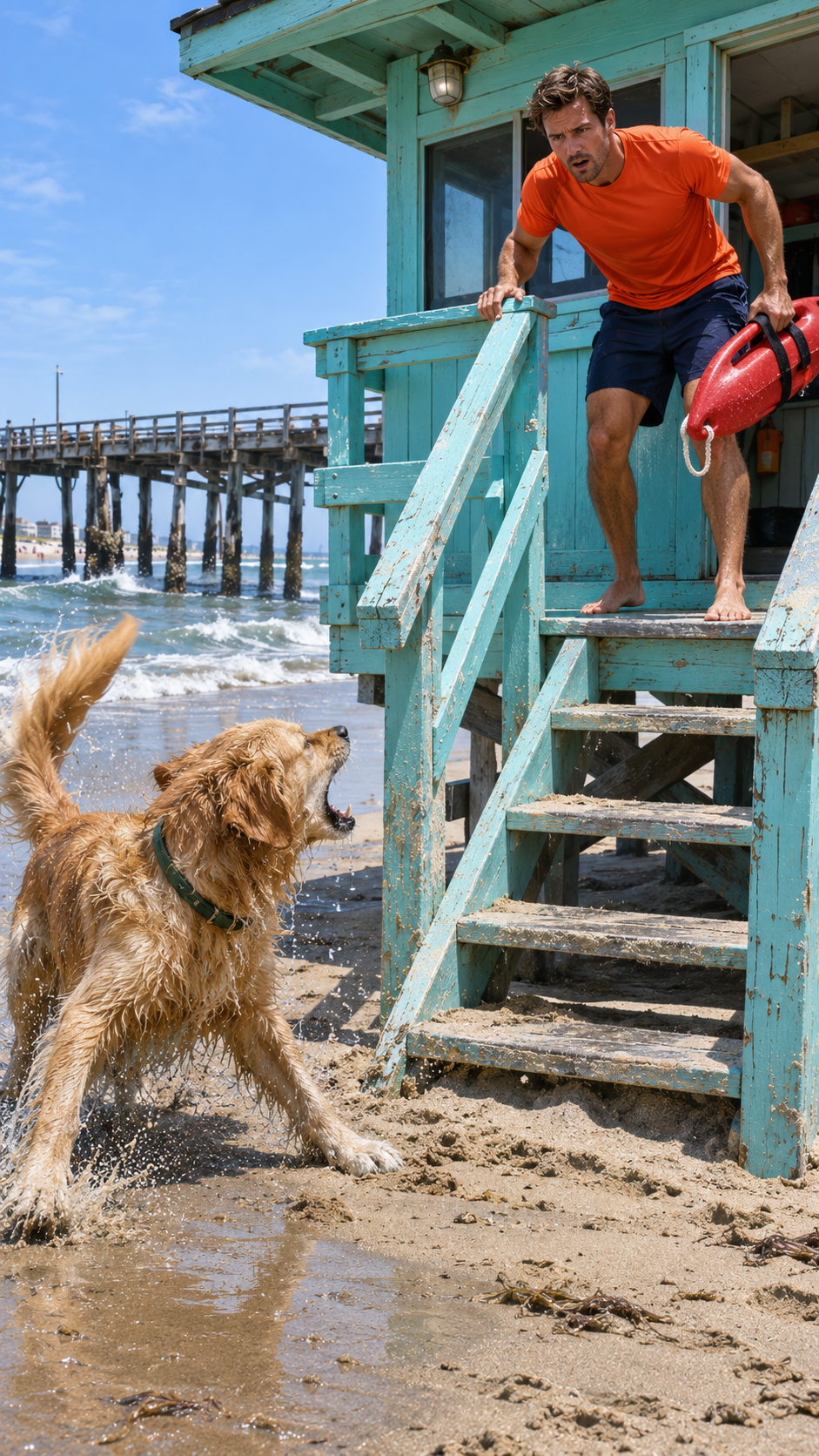
A 34-year-old lifeguard wearing a bright orange shirt and navy shorts stood on the platform.
He was holding a red rescue flotation buoy when the barking dog approached the wooden stairs.
The retriever stopped near the bottom of the staircase and began barking urgently.
The lifeguard immediately looked down.
“Hey, buddy! What’s wrong?”
The golden retriever continued barking.
It repeatedly turned its head toward the distant fishing pier before looking back at the lifeguard.
The unusual behavior caught the man’s attention.
The dog did not appear interested in playing or simply exploring the beach.
Its repeated barking and movements suggested that something had attracted its attention farther along the shoreline.
The lifeguard watched carefully.
The surrounding beach remained filled with the familiar sounds of ocean waves, coastal birds, and gentle wind.
Yet the golden retriever’s urgent barking stood out from the peaceful environment.
The fictional sequence presents this moment as the connection between the dog’s discovery and the arrival of human assistance.
The retriever had traveled away from the trapped dolphin and reached someone equipped to respond to emergencies near the water.
The lifeguard began preparing to leave the station.
He collected his red rescue flotation buoy and a compact marine rescue equipment bag.
The dog remained at the bottom of the stairs, continuing to look toward the fishing pier.
Something unusual was waiting there.
And the lifeguard was about to discover exactly what it was.
The Lifeguard Followed the Determined Dog
The lifeguard quickly descended the wooden staircase.
Carrying his red rescue flotation buoy and marine rescue equipment bag, he reached the sandy beach.
The golden retriever immediately turned and began running along the shoreline.
The lifeguard followed barefoot across the wet sand.
Small waves splashed around their feet as they moved toward the weathered wooden fishing pier.
The dog remained ahead, occasionally barking as it continued toward the granite rocks.
The distance between them and the pier gradually disappeared.
As the lifeguard approached the wooden structure, he noticed movement in the shallow seawater.
Then he saw the trapped dolphin.
The gray marine animal remained between the large rocks, tangled in green fishing net and transparent plastic debris.
The lifeguard’s expression immediately changed.
“Oh, no! You’re tangled up. Hang on, buddy!”
He looked carefully toward the dolphin and the surrounding obstruction.
The golden retriever stood nearby, barking as the man recognized the seriousness of the situation.
The dolphin’s movements remained restricted by the tangled material.
Waves continued moving through the shallow area beneath the pier.
The lifeguard could now understand why the dog had been behaving so unusually near his station.
The fictional narrative had brought him directly to the animal in distress.
What initially appeared to be an excited dog barking at the bottom of a staircase had become an unexpected marine rescue.
The lifeguard prepared to approach the trapped animal.
The golden retriever remained nearby, watching as the man moved toward the shallow seawater.
The fishing net still needed to be removed before the dolphin could return to the ocean.
The Rescue Beneath the Fishing Pier
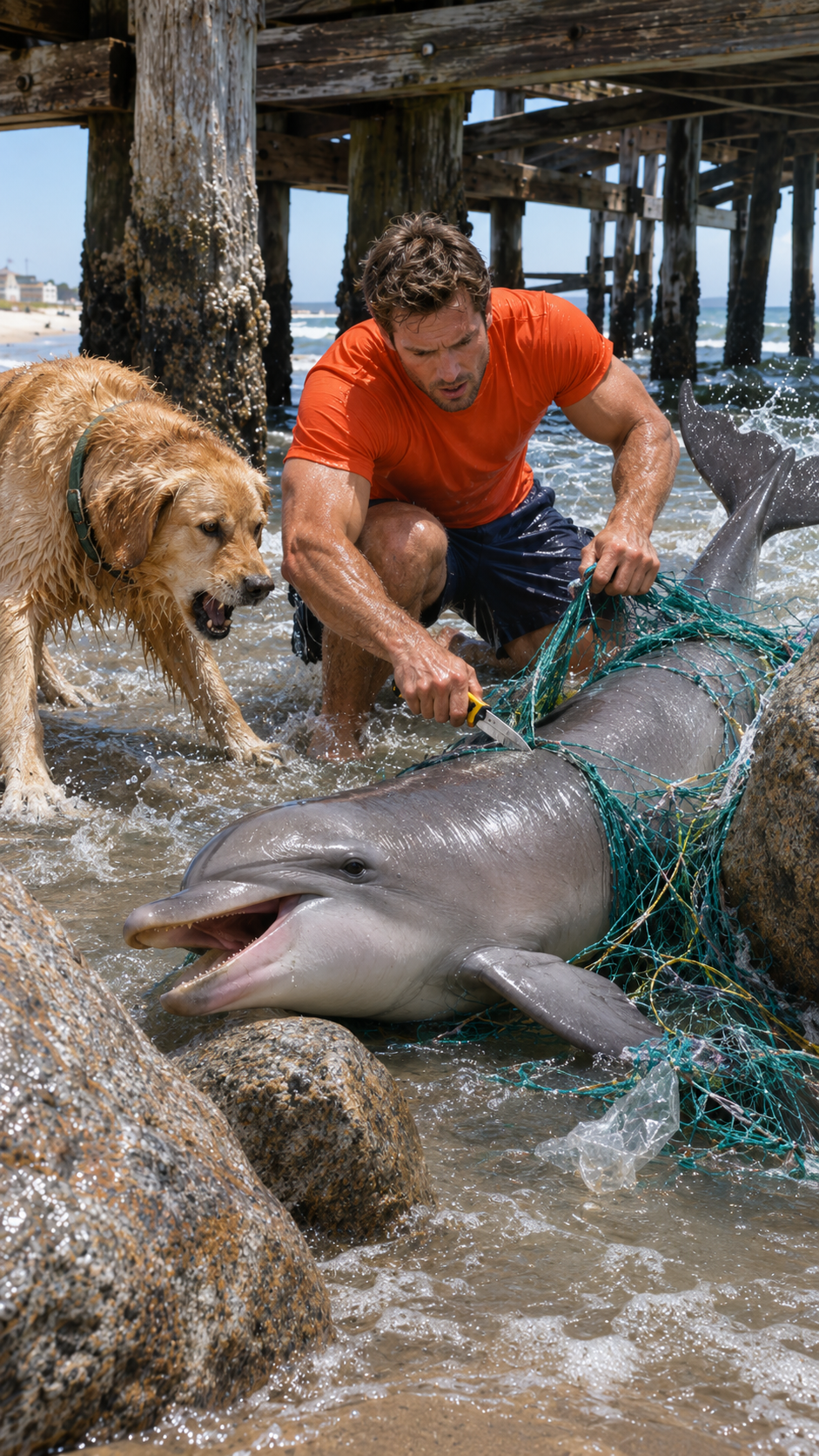
The lifeguard carefully knelt in the shallow seawater beside the trapped bottlenose dolphin.
His bright orange shirt stood out against the gray granite rocks and weathered wooden pier.
The golden retriever watched from nearby.
Using marine rescue shears, the lifeguard began addressing the tangled green fishing net.
Within the fictional sequence, he carefully removed the material restricting the dolphin’s movements.
He also removed the pieces of transparent plastic debris caught around the animal.
The dolphin remained in the shallow water as gentle waves rolled beneath its body.
The golden retriever continued watching anxiously.
The sound of moving seawater mixed with the quiet noise of the fishing net being cut.
“Easy, easy,” the lifeguard said reassuringly.
Gradually, the tangled material began coming loose.
The final section of net was removed, allowing the dolphin to move more freely.
“There you go. You’re free!”
The dolphin began moving toward deeper water.
The golden retriever barked excitedly as the animal moved away from the granite rocks.
The obstruction that had prevented the dolphin from escaping was no longer holding it in place.
The lifeguard watched the marine animal carefully.
The fictional rescue had reached its most important moment.
What began with a desperate splash beneath the fishing pier had become a scene of relief.
The golden retriever’s discovery and its journey toward the lifeguard station had led to the removal of the dangerous debris.
The dolphin was now able to move toward the open ocean.
However, one final moment remained before the extraordinary encounter would reach its emotional conclusion.
Why Abandoned Fishing Nets Are Dangerous to Marine Animals
Although the rescue depicted in this story is fictional, discarded fishing equipment presents a genuine threat to marine wildlife.
Lost or abandoned fishing nets can remain in the ocean for extended periods.
These materials may continue trapping animals even when they are no longer being used by fishermen.
Marine mammals, sea turtles, fish, and seabirds can become entangled in fishing lines, ropes, and nets.
For dolphins, entanglement can restrict movement, interfere with feeding, and make it difficult to reach the surface to breathe.
Dolphins are mammals rather than fish.
Although they spend their lives in the ocean, they must regularly surface to breathe air through their blowholes.
Any obstruction that prevents a dolphin from moving normally or reaching the surface can create a serious emergency.
The green fishing net in this fictional story illustrates one of the ways abandoned marine debris can threaten wildlife.
The surrounding granite rocks make the situation even more complicated because the tangled material becomes caught against the shoreline.
The transparent plastic debris introduces another environmental concern.
Plastic waste can enter marine environments through littering, improperly managed waste, stormwater runoff, and other sources.
Once in the ocean, it can threaten wildlife through entanglement or ingestion.
The fictional dolphin rescue encourages viewers to recognize that ordinary discarded materials can have serious consequences when they enter natural environments.
Responsible disposal of fishing equipment and plastic waste is an important part of protecting coastal ecosystems.
The Remarkable Awareness of Golden Retrievers
Golden retrievers are widely recognized for their intelligence, sociability, and responsiveness to people.
Their ability to learn commands and cooperate with human handlers makes them suitable for many different roles.
Some are trained as assistance dogs, search-and-rescue dogs, or therapy animals.
They are also popular companions because of their generally friendly and adaptable nature.
In this fictional story, the golden retriever demonstrates an imaginative combination of curiosity, persistence, and responsiveness.
It notices the trapped dolphin, attempts to interact with the fishing net, and subsequently attracts the lifeguard’s attention.
However, these actions should not be interpreted as evidence that an untrained dog would necessarily understand the circumstances of a marine animal emergency.
Dogs may react to unfamiliar animals through curiosity, excitement, fear, or other instinctive responses.
The story dramatizes those behaviors to create a compelling rescue narrative.
Its emotional appeal comes from the idea that an animal’s unusual behavior can draw human attention toward something that might otherwise remain unnoticed.
The retriever’s persistent barking becomes the central connection between the trapped dolphin and the lifeguard.
Its journey along the beach provides the transition from discovery to assistance.
The fictional character represents the loyalty and attentiveness that many people associate with their canine companions.
The Important Role of Marine Rescue Professionals
The lifeguard in the story responds after noticing the golden retriever’s unusual behavior.
He collects rescue equipment and follows the dog toward the fishing pier.
Within the dramatized sequence, he successfully removes the fishing net and plastic debris.
Real marine mammal rescues, however, can be considerably more complicated.
A trapped dolphin may be frightened, exhausted, injured, or experiencing serious medical complications.
Even when an animal appears calm, sudden movements can create risks for both the dolphin and anyone attempting to assist it.
Entangled fishing equipment may also present hazards that are not immediately visible.
Specialized marine mammal rescue teams receive training to assess these situations and determine the safest appropriate response.
They may coordinate with veterinarians, wildlife authorities, and other qualified personnel.
Members of the public who discover a stranded or entangled dolphin should maintain a safe distance and contact the appropriate marine wildlife rescue organization.
They should not attempt to cut away fishing equipment, move the animal, or push it into deeper water without professional direction.
Domestic dogs should also be kept away from distressed marine wildlife.
The fictional rescue shown in the video is compressed into a brief cinematic sequence for storytelling purposes.
It does not represent the complete procedures required during a real marine mammal emergency.
The most valuable message is the importance of recognizing an animal in distress and obtaining qualified assistance.
Small Actions Can Help Protect the Ocean
Protecting marine wildlife does not always require participating directly in a rescue.
Many meaningful contributions begin with ordinary decisions.
Properly disposing of plastic packaging, fishing lines, and damaged equipment can help prevent waste from entering waterways.
Participating in organized beach cleanups can also help remove debris before it reaches the ocean.
People who spend time fishing should ensure that unwanted lines, nets, and other materials are collected and disposed of responsibly.
Beach visitors can contribute by leaving coastal environments clean and respecting local wildlife protection guidelines.
Reporting injured or entangled animals to qualified authorities is another important way to help.
The dolphin in this fictional story becomes trapped in materials that do not belong in its natural environment.
Its struggle provides a visual reminder of how human-generated waste can create unexpected dangers for marine animals.
The golden retriever’s discovery brings attention to a problem that might otherwise have remained hidden beneath the wooden pier.
Although the events are imagined, the environmental message remains relevant.
Cleaner beaches and healthier marine environments benefit wildlife, coastal communities, and future generations.
An Extraordinary Connection Between Land and Sea
One of the most memorable elements of the story is the contrast between its two animal characters.
The golden retriever is a familiar domestic animal, comfortable moving across the sandy beach.
The bottlenose dolphin is a marine mammal whose natural environment extends far beyond the shoreline.
Their fictional encounter brings together two very different worlds.
The dog discovers the dolphin in an environment where the marine animal has become vulnerable.
Its repeated barking and attempt to interact with the net create the initial emotional tension.
When the retriever runs toward the lifeguard station, the story shifts from uncertainty to hope.
The lifeguard becomes the human connection between the two animals.
His arrival allows the narrative to progress toward the removal of the fishing debris.
The final result is a fictional rescue that celebrates awareness, compassion, and cooperation.
The story does not require the animals to communicate through human language.
Their movements, reactions, and surroundings communicate the unfolding situation.
The dolphin’s splashing tail establishes the danger.
The golden retriever’s barking communicates urgency.
The lifeguard’s reassuring words introduce hope.
Together, these elements create an emotional sequence that can be understood without narration.
The Ocean Was Waiting for the Dolphin
After the fishing net was removed, the dolphin began moving away from the shallow area beneath the wooden pier.
The gentle waves continued rolling toward the granite rocks.
The lifeguard and golden retriever moved toward the sandy shoreline.
The man remained barefoot, wearing his bright orange shirt and navy shorts.
Beside him stood the same wet golden retriever with its dark green collar.
Both looked toward the open water.
The frightening moments beneath the pier were gradually giving way to a peaceful coastal scene.
The golden retriever’s tail began wagging excitedly.
Farther from the shoreline, the dolphin moved through the seawater without the tangled fishing net restricting its movements.
The fictional narrative does not establish the animal’s long-term medical condition or whether further monitoring would be necessary.
Instead, it focuses on the immediate emotional relief of seeing the dolphin swimming away from the obstruction.
The lifeguard looked down toward the dog that had attracted his attention.
He had first encountered the retriever barking urgently at the bottom of the lifeguard station.
Now they stood together beside the ocean, watching the result of their extraordinary fictional adventure.
The bright sunlight, gentle waves, and distant coastal birds created a beautiful setting for the final moments.
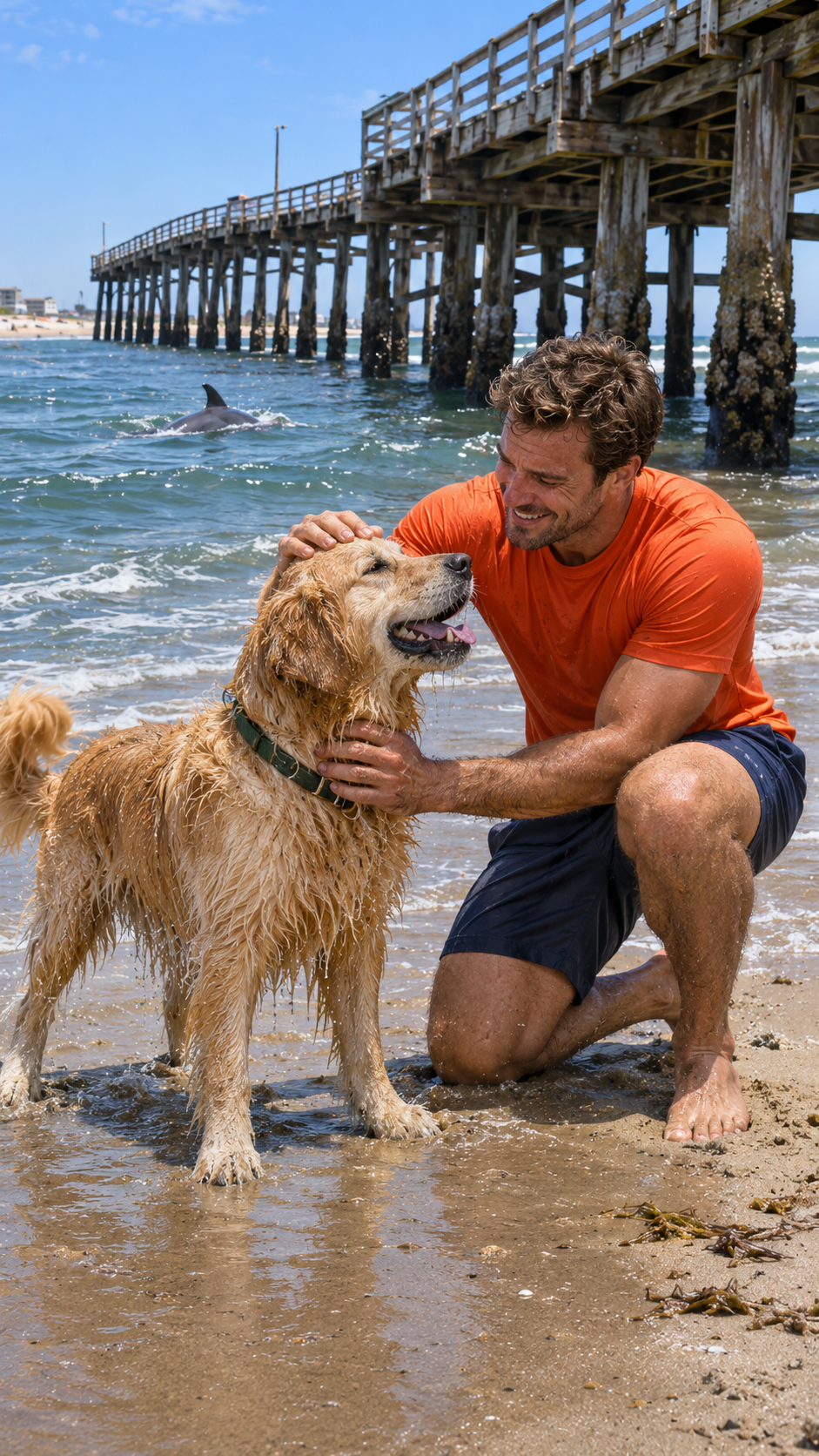
The dolphin’s dorsal fin rose above the ocean before it surfaced again farther from the beach. The golden retriever wagged its tail happily as the lifeguard knelt beside it and gently stroked its head. “You saved its life, buddy. Good boy!” he said with a proud smile. As the dolphin disappeared into the open water, their extraordinary fictional adventure offered a heartwarming reminder of compassion, the importance of protecting marine wildlife, and the remarkable difference that noticing an animal in distress can make.
Disclaimer: This article and its accompanying video are fictional, AI-generated content created for entertainment, inspirational storytelling, and environmental awareness. The golden retriever, dolphin, lifeguard, and rescue events do not represent a verified real-life incident. The depicted animal behavior and rescue procedures are dramatized. Never allow domestic pets to approach distressed marine wildlife or attempt to disentangle marine mammals without professional authorization and training. Contact qualified marine mammal rescue organizations and wildlife authorities during real emergencies. No real people or animals were endangered or harmed during the creation of this fictional content.