An Unexpected Visitor in the Snow
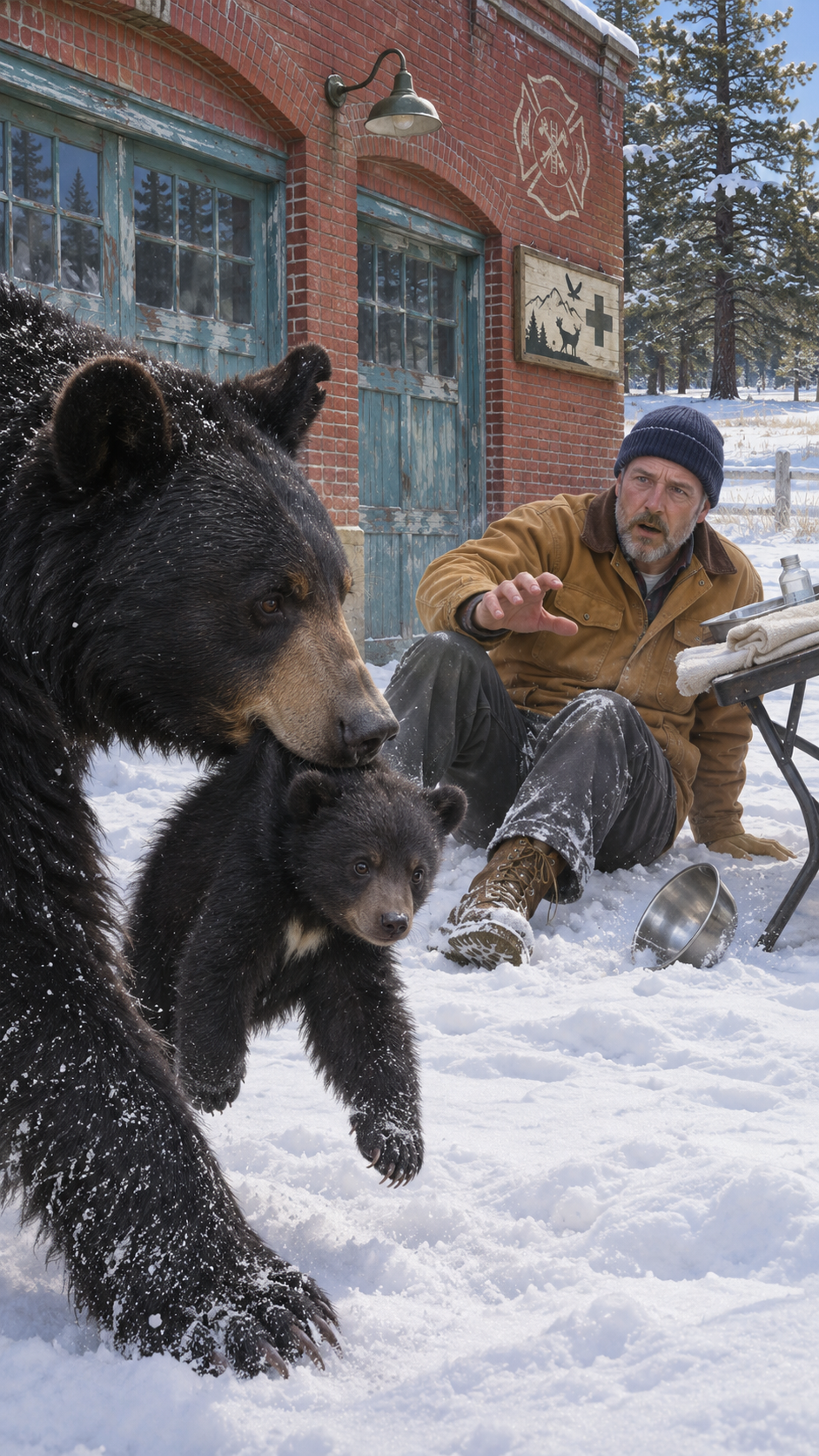
The ground outside the small wildlife treatment facility was covered in fresh snow. Tall pine trees surrounded the clearing, their branches carrying a thin layer of white powder. Near the building stood a folding table with several supplies and a metal bowl.
Ben, wearing a mustard-colored winter jacket, was outside when movement caught his attention.
A mother bear was approaching.
Her large body moved steadily across the snow, but something beneath her muzzle immediately made the encounter unusual.
A tiny black paw swung gently with each step.
She was carrying her cub by the scruff of its neck.
Ben instinctively stepped backward. His legs struck the folding table, causing him to lose his balance and land seated in the snow. The metal bowl spun off the edge of the table and struck the ground with a sharp metallic ring.
The mother bear continued approaching.
Ben remained where he was, watching her carefully. The cub hanging beneath her muzzle appeared unusually weak, its small paws moving only slightly.
Then the mother lowered her head.
She placed the cub in the snow beside Ben’s boot.
“Whoa. Easy, mama,” he said quietly.
As the sound of the fallen bowl faded, Ben heard something much softer.
A tiny whimper.
The little cub was alive, but it clearly needed attention.
The Mother Refuses to Leave Her Baby
Ben remained seated in the snow, his attention fixed on the small animal beside his boot.
The mother bear lowered her muzzle and gently nudged his knee. Then she turned toward her cub, touching its little body with her nose.
Ben watched closely.
For a moment, the cub barely moved. Its dark fur contrasted sharply with the white snow surrounding it.
Then he noticed its ribs rising slightly.
The cub was breathing.
That small movement brought a moment of relief, although its weakness remained concerning. Ben knew that the little animal needed to be somewhere warm and protected.
“I’ve got you, little one.”
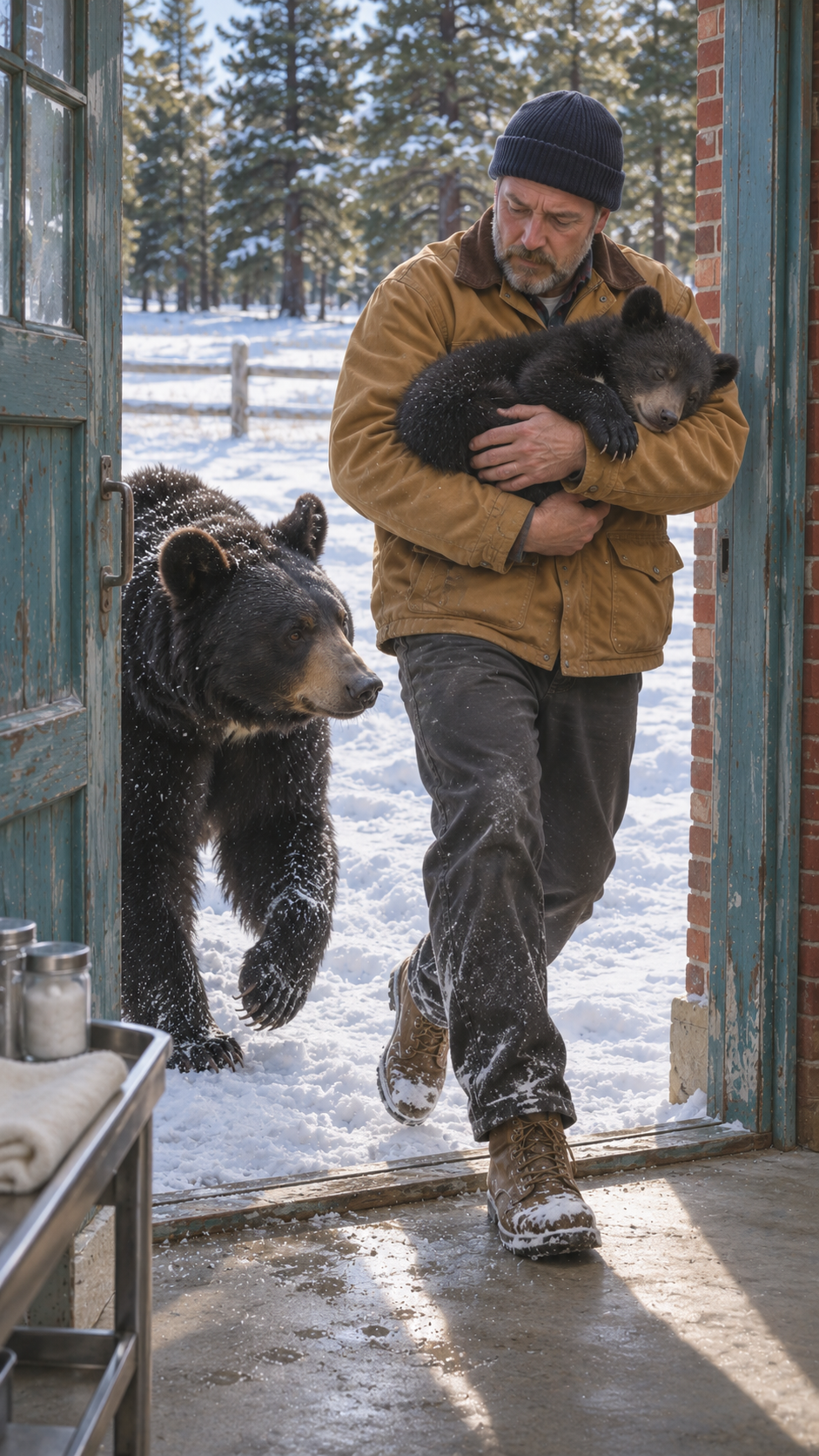
He carefully gathered the cub against his mustard-colored jacket. Its small body rested against his chest as he rose from the snow.
The mother bear remained nearby, watching every movement.
Ben turned toward the building, where a teal-colored door stood open. He stepped through the entrance with the cub held securely against him.
The sound of his boots changed from the crunch of snow to the firm tapping of concrete.
Behind him, the mother followed.
The encounter that had begun with a frightening surprise outside was becoming an unexpected wildlife rescue.
Inside the building, the cub would have access to warmth, recovery equipment, and a sheltered environment away from the winter weather.
Its mother stayed close.
The First Signs of Recovery
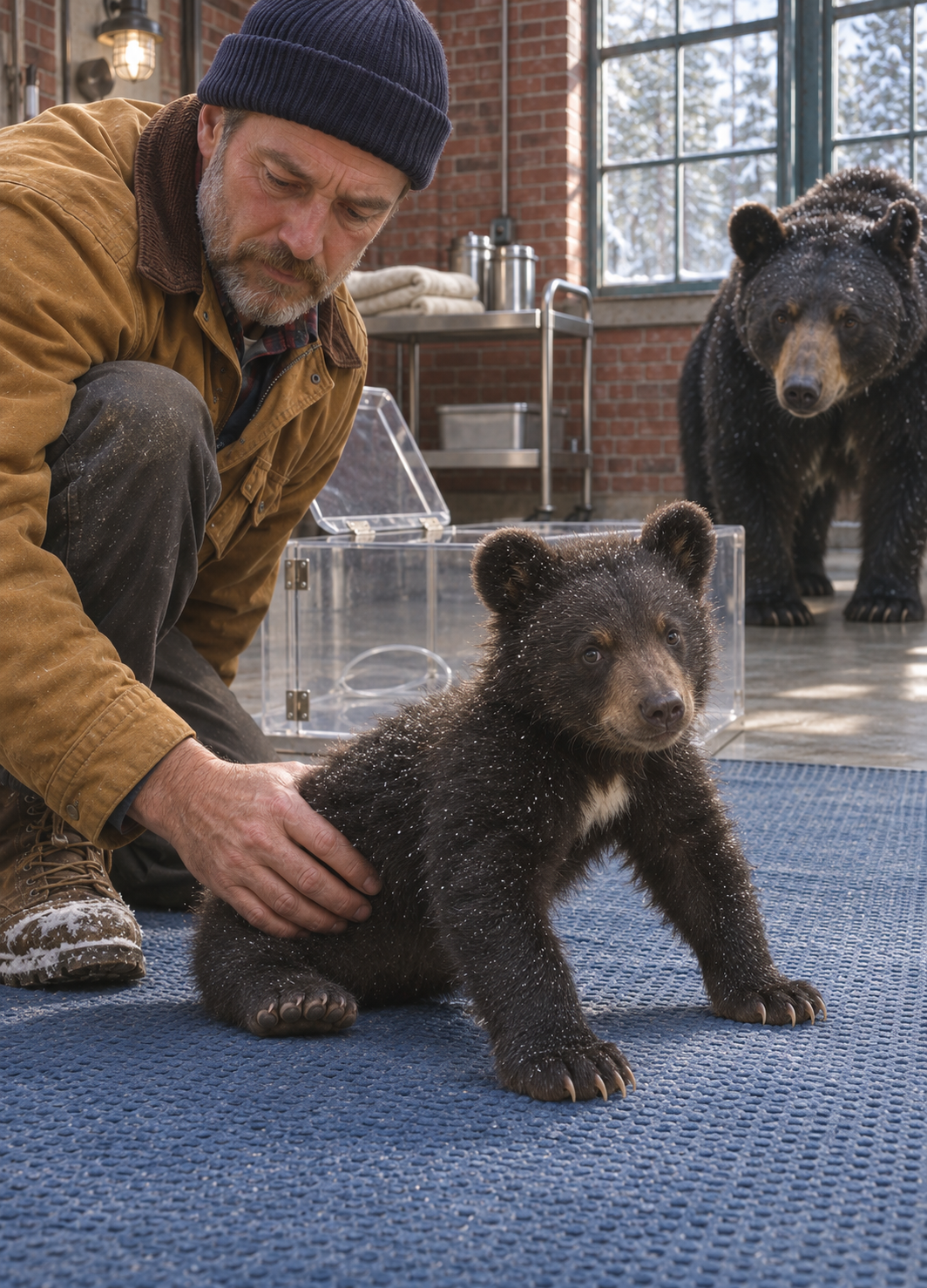
Inside the treatment bay, the little cub rested in a clear recovery box beside a thin oxygen line.
The room was quiet apart from the gentle hiss of the equipment. A blue rubber mat covered part of the floor, and supplies were arranged nearby.
The mother bear stood close enough for her muzzle to appear reflected in the transparent side of the recovery box.
Her attention remained fixed on the little animal inside.
The cub slowly opened its eyes.
Ben watched as it blinked, appearing more responsive than it had outside in the snow. Although it was still weak, the movement suggested that it was beginning to regain some energy.
He carefully lifted the cub from the low recovery box and placed it on the blue rubber mat.
The little bear attempted to stand.
Its front paws pressed against the rubber surface. Its hind legs followed, but its balance was uncertain.
Ben kept his hands nearby.
The cub managed one small step before its legs began to wobble. It tipped gently onto one hip, unable to remain upright.
“Easy. I’m right here.”
Ben steadied its little body.
The cub’s claws brushed softly against the rubber mat as it tried to reposition itself.
It was not yet ready to move around independently, but the attempt was encouraging.
Only a short time earlier, the mother had carried the cub through the snow. Now it was beginning to respond to its surroundings and make an effort to stand.
Recovery would take patience.
Ben understood that there was no reason to rush the process. The little animal needed time to regain its strength, and every small improvement was worth noticing.
The mother continued watching from nearby.
The First Real Drink
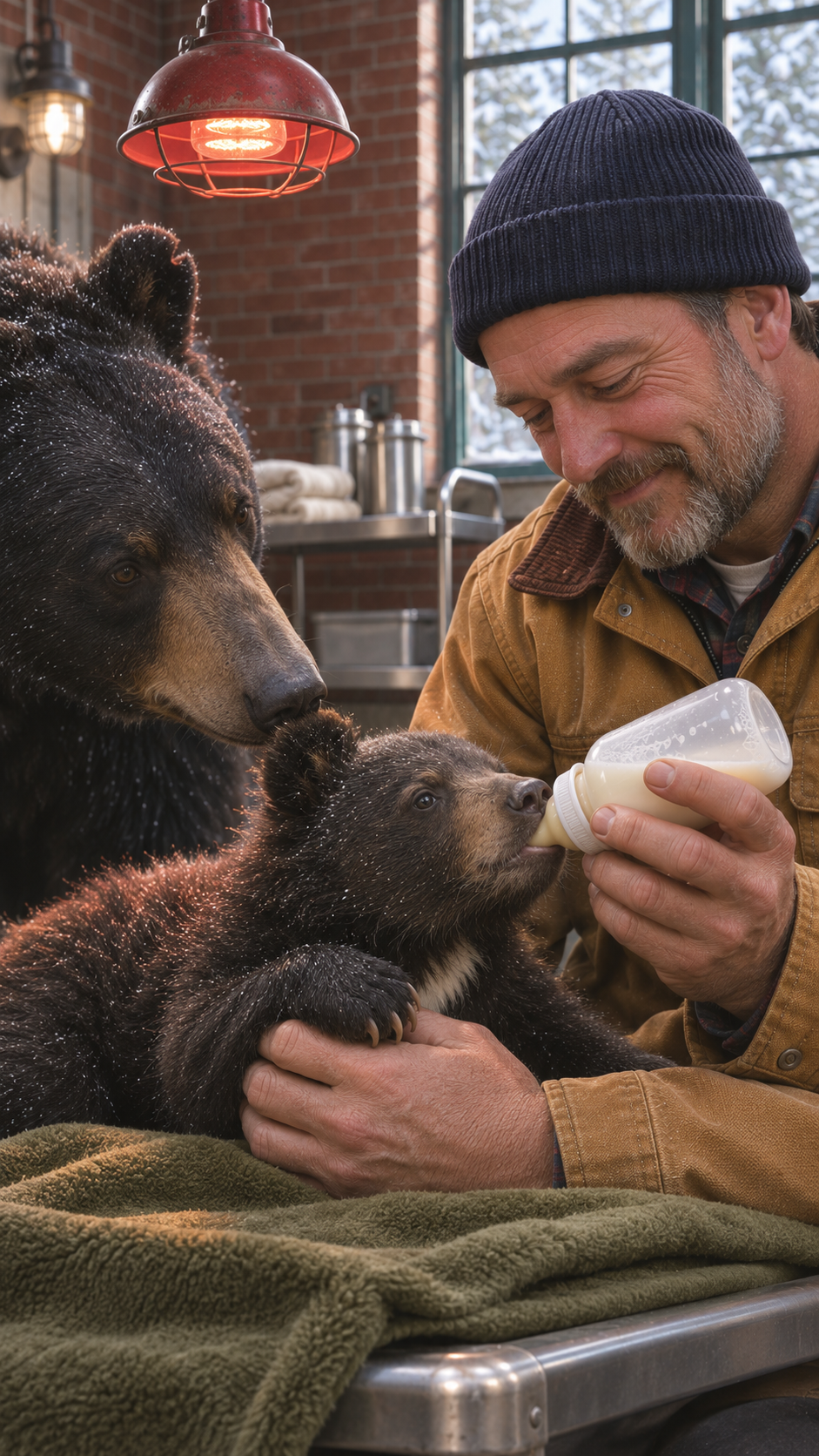
Later that day, the cub was resting in a low warming cot beneath a red warming lamp.
An olive-colored fleece blanket provided a soft surface beneath its body. The gentle sound of a heater fan filled the room, maintaining a peaceful atmosphere around the recovery area.
Ben sat beside the cot holding a small white feeding bottle.
The cub appeared more alert than before. Its eyes followed the movement of the bottle as Ben brought it closer.
Then something encouraging happened.
The little bear curled one of its paws around Ben’s thumb and began drinking.
Ben remained still, watching the cub swallow.
The tiny gulps were audible above the quiet heater fan.
For the first time since the mother had arrived outside, the little animal appeared genuinely interested in feeding.
Ben smiled.
“There’s that appetite.”
The mother bear moved closer to the warming cot. She lowered her muzzle and gently touched the cub’s ear with her nose.
The cub continued drinking.
The moment was remarkably peaceful compared with the sudden encounter in the snow.
Outside, Ben had fallen backward when the mother approached. The metal bowl had crashed to the ground, and the cub had barely moved.
Now the little animal was warm, responsive, and feeding.
Its mother remained close, occasionally touching it with her muzzle.
Ben continued observing the cub, allowing it to drink without unnecessary interruption.
The improvement did not mean that every concern had disappeared. The story does not establish a specific diagnosis or the exact cause of the cub’s original weakness.
But its returning appetite represented an important change in the fictional recovery.
The little bear was beginning to show the energy that had been missing when it first arrived.
Small Improvements Bring New Hope
The recovery process continued over the following days.
The treatment bay became a temporary place of shelter for the mother and her cub. The clear recovery box, warming cot, fleece blanket, and blue rubber mat remained familiar parts of their surroundings.
As time passed, the cub appeared increasingly active.
The little animal that had struggled to take a single step began moving with greater confidence. Its attention shifted toward the objects around it, and its natural curiosity became more noticeable.
Ben could see the difference in its movements.
There was no longer the same hesitation when it placed its paws against the floor. The cub was becoming more comfortable standing and exploring.
Throughout the fictional recovery, the mother remained nearby.
Her presence connected the cub’s difficult arrival with its gradual improvement. She had carried it through the snow, placed it beside Ben, and stayed close as it received care.
Now she was watching her baby become stronger.
For Ben, the most rewarding moments were not dramatic ones. They were the ordinary signs of returning energy: the cub lifting its head, taking an interest in food, and moving around the treatment bay.
Each improvement brought the little bear closer to returning outdoors.
Days Later, the Cub Has a Surprise
Sunlight filled the treatment bay several days after the original encounter.
Ben sat on a stool near the blue rubber mat. The cub was now active, moving around with noticeably greater confidence.
Its mother sat nearby.
Ben held a small silver trout and dropped it onto the mat.
The fish landed with a wet slap.
The cub immediately reacted.
It pounced toward the trout, picked it up in its mouth, and began moving across the mat.
Ben watched with amusement.
He expected the little bear to show interest in the fish, but its next movement surprised him.
Instead of remaining where it was, the cub trotted directly toward its mother.
It took two quick steps before rising onto its hind paws.
The silver trout remained held in its mouth.
The mother lowered her head and took the fish from the cub.
Ben laughed from his stool.
“Oh, that one’s for Mom?”
The little bear returned its front paws to the mat.
The moment offered a striking contrast to its first attempt at walking. Only days earlier, it had wobbled after taking a single step and tipped gently onto its hip.
Now it was moving quickly enough to pounce on a fish and carry it across the room.
Its energy had returned.
The mother accepted the trout while Ben watched the pair together.
Within the fictional story, the exchange was presented as a playful gesture between the cub and its mother. Whether the cub intended to share the fish cannot be established, but the interaction created a particularly touching moment.
The little bear was no longer simply resting and recovering.
It was behaving like a curious, energetic young animal again.
The Moment Ben Had Been Waiting For
The cub’s playful behavior made its progress unmistakable.
When Ben first encountered the bears, the mother had been carrying her baby through the snow. The cub appeared weak and had made only a small sound when she placed it beside his boot.
Inside the treatment bay, its first steps had been uncertain. It needed support, warmth, and time.
Now the little animal was moving confidently across the same blue mat.
The recovery had changed the atmosphere of the room.
Instead of listening primarily to the hiss of oxygen equipment or the quiet heater fan, Ben could hear the quick patter of paws.
The mother bear was still present, but the cub no longer appeared dependent on being carried everywhere.
It could stand, move, investigate, and interact with its surroundings.
The fish exchange captured that transformation in a single moment.
Ben’s laughter reflected the relief of seeing the little animal behaving with renewed energy.
Soon, the story would move beyond the treatment bay.
The snowy forest waited outside, and the mother and cub would have the opportunity to continue their journey together.
FOTO 5
Preparing to Return to the Pines
Outside the facility, the winter landscape remained covered in soft snow.
The pine trees stood beyond the clearing, and fresh powder stretched across the ground.
Ben accompanied the bears toward the edge of the wooded area.
His mustard-colored jacket remained a familiar sight against the white surroundings.
The mother bear moved ahead with her cub nearby.
Ben slowed from a jog and raised his hand.
“Go on, you two.”
The little cub followed its mother through the snow.
Its paws sank slightly into the soft powder as it moved.
The outdoor environment was very different from the smooth blue rubber mat inside the treatment bay. Snow shifted beneath its feet, creating an uneven surface.
Nevertheless, the cub continued forward.
Ben watched as the pair moved toward the pines.
The moment represented the conclusion of the fictional recovery.
The mother had arrived carrying a weak baby.
Now she was leaving with a cub capable of following her on its own feet.
There was no need for the little animal to remain in the treatment bay within the story’s resolution.
Its journey was taking it back toward the natural surroundings where it belonged.
But before the bears disappeared into the trees, one final moment captured the bond between them.
The Mother Turns Back
The cub hurried through the powder, trying to keep up with its mother.
Its small paws moved quickly across the snow.
Then one paw caught in the soft surface.
The little bear lost its balance and tumbled gently onto its back.
A soft thump interrupted the quiet movement of the pair.
The mother immediately turned around.
She stepped back toward the cub, lowering her head until her muzzle was close to its face.
The little bear looked up from the snow.
Their noses touched.
The interaction was brief, but it echoed the mother’s behavior throughout the entire story.
When she first arrived, she had carried the cub carefully by the scruff.
Outside the treatment facility, she had touched its body with her nose.
Inside the warming area, she had gently nosed its ear while it drank.
Now, as the pair prepared to return to the forest, she was once again checking on her baby.
The cub remained in the soft powder, looking toward its mother.
The quiet sounds of their breathing filled the final moment.
More Than a Story About Recovery
The fictional encounter explores the connection between vulnerability, patience, and care.
Ben’s role begins with surprise. He falls backward when the mother approaches, uncertain about what is happening.
But the sight of the weak cub changes his attention.
He recognizes that the little animal is breathing and brings it into the treatment bay. Over the following days, the cub gradually becomes stronger.
The mother remains a central part of that journey.
Her presence accompanies every important stage, from the initial arrival to the cub’s first drink, its playful interaction with the trout, and its return to the snowy landscape.
The story does not need to establish that the bear understood Ben’s intentions in human terms. Her actions are portrayed cinematically to communicate maternal care and the urgency of the situation.
What makes the ending particularly meaningful is that the cub does not remain with Ben.
The goal of the fictional rescue is not to turn a wild animal into a companion. It is to show the little bear recovering and returning to its natural environment alongside its mother.
That final image of the pair together brings the story full circle.
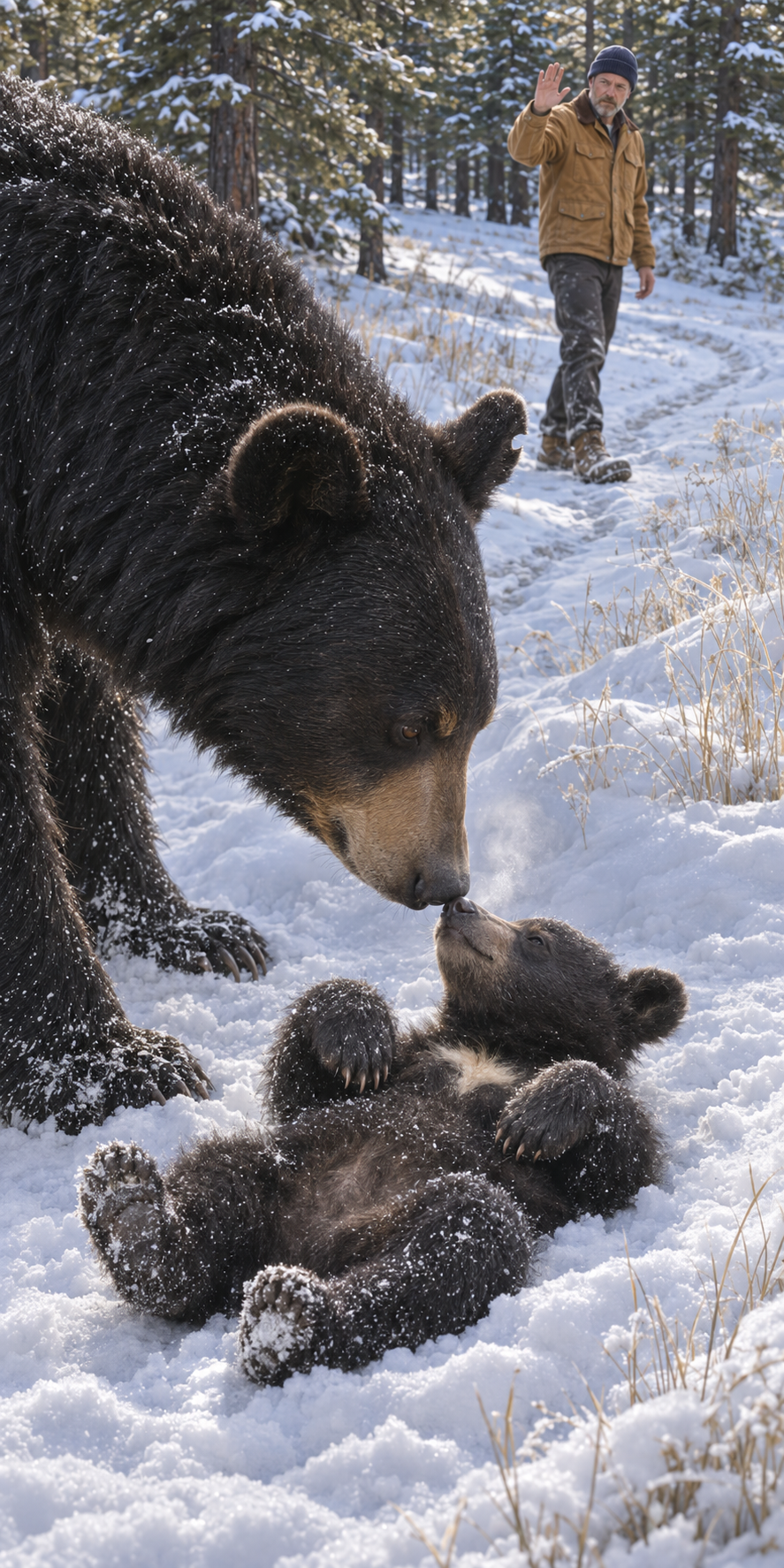
As the little cub tumbled into the soft snow, its mother immediately turned back and gently touched its upturned muzzle. Ben watched from behind as the pair prepared to continue toward the pine trees. Days earlier, the mother had arrived carrying a weak baby that could barely stand. Now her cub was strong enough to follow her into the forest. Their final nose-to-nose moment offered a touching conclusion to a journey that began with uncertainty and ended with recovery, companionship, and renewed hope.